
SFS is one of those short internet slang terms you may see in texts, Instagram captions, Snapchat stories, TikTok comments, or DMs. At first, it can look confusing because it has more than one meaning. In most online chats, SFS means “Shoutout for Shoutout.” It is usually used when two people agree to promote each other’s accounts, posts, or profiles.
But depending on the platform, SFS can also mean “Snap for Snap” or “Spam for Spam,” so context matters a lot.
What Does SFS Mean in Text?
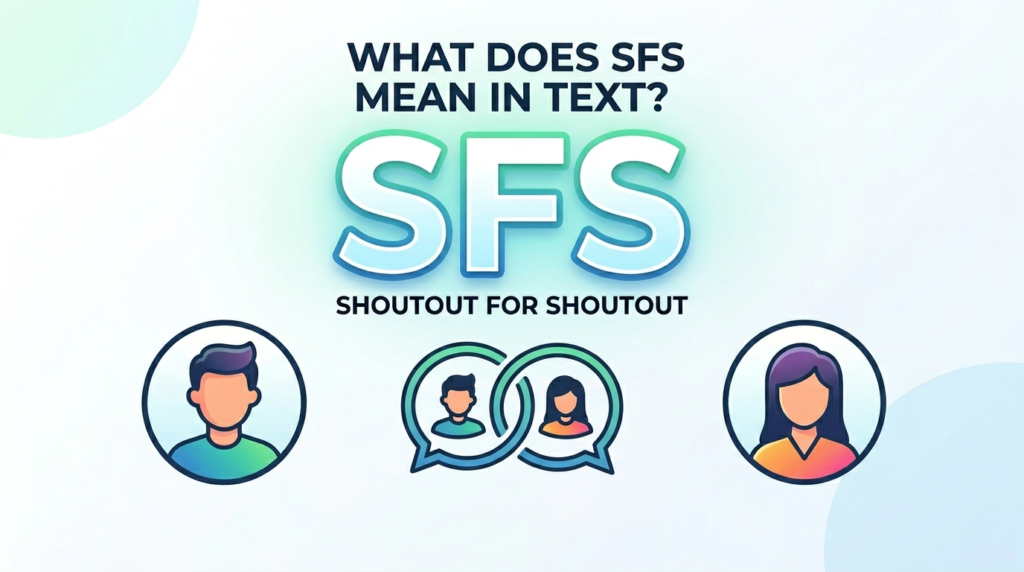
SFS most commonly means “Shoutout for Shoutout” in text and social media chats. It is a way of asking someone to promote you if you promote them back.
For example:
“Wanna do SFS?”
This means:
“Do you want to give me a shoutout, and I’ll give you one too?”
A shoutout is when someone mentions your username, profile, page, or content so their followers can check you out. In return, you do the same for them.
So, in simple words, SFS is a mutual promotion exchange.
It is especially common on:
- Snapchat
- TikTok
- Creator group chats
- Influencer communities
People use SFS when they want more followers, more views, more likes, or more engagement.
Simple Meaning of SFS
The simple meaning of SFS is:
SFS = Shoutout for Shoutout
It means:
“You promote me, and I’ll promote you.”
Imagine you have 1,000 followers and your friend has 1,200 followers. You post their account on your story, and they post your account on their story. That is SFS.
Example:
“SFS? I’ll post your page if you post mine.”
This means both people help each other grow.
SFS can also mean:
- Snap for Snap on Snapchat
- Spam for Spam on Instagram or TikTok
- Sorry for spamming in some casual texts
- So freaking stressed in rare emotional messages
But the most common meaning in social media texting is still Shoutout for Shoutout.
Where Is SFS Used?

SFS is mostly used on social media and messaging apps. It is not a formal word, so you will usually see it in casual online conversations.
SFS on Instagram
On Instagram, SFS usually means Shoutout for Shoutout.
People may use it in captions, stories, bios, or DMs.
Example:
“DM me for SFS 💕”
This means the person is open to exchanging shoutouts.
Another example:
“Doing SFS with active accounts only.”
This means they want to exchange promotions with people who have real engagement.
On Instagram, SFS may involve:
- Posting someone’s profile on your story
- Tagging their username
- Sharing their post
- Recommending their page
- Asking your followers to follow them
SFS on Snapchat
On Snapchat, SFS can mean Shoutout for Shoutout or Snap for Snap.
Example:
“Anyone down for SFS?”
This may mean the person wants to exchange story shoutouts.
But if someone says:
“SFS streak?”
They may mean Snap for Snap, where both people send snaps to each other to keep interaction going.
Snapchat users may use SFS to:
- Increase story views
- Get more ads
- Promote usernames
- Maintain streaks
- Meet new people
SFS on TikTok
On TikTok, SFS is less common than on Instagram or Snapchat, but people still use it.
Example:
“SFS? I’ll repost your video if you repost mine.”
This means two creators are helping each other get more visibility.
TikTok users may do SFS by:
- Reposting videos
- Tagging each other
- Commenting on each other’s posts
- Sharing profiles
- Supporting new creators
SFS in Text Messages
In regular text messages, SFS usually still means Shoutout for Shoutout if the conversation is about social media.
Example:
“Can we do SFS later?”
This means the person wants to exchange shoutouts.
But if the conversation is not about social media, SFS may mean something else. That is why you should always read the full message.
Why Do People Use SFS?
People use SFS because it is a quick way to grow online, get attention, and connect with other users.
It Helps People Gain Followers
The main reason people use SFS is to grow their audience.
If someone with followers promotes your account, some of their followers may check your profile and follow you.
Example:
“SFS helped me gain 50 followers today.”
This means the person got new followers because someone shouted them out.
It Increases Engagement
SFS can help people get more:
- Likes
- Comments
- Story views
- Profile visits
- Shares
- Follows
This is why small creators, fan pages, meme pages, and personal accounts often use it.
It Builds Online Connections
SFS is also a way to connect with other people online.
If two creators support each other, they may keep collaborating later.
Example:
“We did SFS once, and now we always support each other’s posts.”
It Feels Like Mutual Support
Many people like SFS because it feels fair.
One person is not asking for free promotion. Both people are helping each other.
It is basically:
“I support you, you support me.”
It Saves Time
Instead of writing:
“Can you post my account on your story, and I’ll post yours too?”
People simply write:
“SFS?”
Short, simple, and easy.
Real-Life Examples of SFS With Meanings
Here are some common examples of how people use SFS in real chats.
Example 1: Instagram DM
“Hey, wanna do SFS?”
Meaning:
The person wants to exchange shoutouts on Instagram.
Example 2: Snapchat Story
“Doing SFS, swipe up.”
Meaning:
The person is asking people to message them if they want a shoutout exchange.
Example 3: Creator Chat
“SFS with accounts over 5k only.”
Meaning:
The person wants to exchange shoutouts only with accounts that have more than 5,000 followers.
Example 4: TikTok Message
“I’ll repost your video if you repost mine. SFS?”
Meaning:
The person wants mutual promotion on TikTok.
Example 5: Spam for Spam
“SFS on my latest post?”
Meaning:
This may mean Spam for Spam, where both people like and comment on each other’s posts a lot.
Example 6: Snap for Snap
“SFS? Send a snap back.”
Meaning:
On Snapchat, this may mean Snap for Snap, where both people exchange snaps.
What Does SFS Mean to a Girl?
If a girl texts you SFS, she is usually asking for Shoutout for Shoutout or Snap for Snap, depending on the platform.
Example:
“SFS on Snap?”
This may mean she wants you to share her Snapchat username or exchange snaps.
If she says:
“Can you do SFS for my page?”
She probably wants you to promote her account.
It does not automatically mean she is flirting. Most of the time, SFS is about social media support.
However, if she sends it in a playful private chat, especially on Snapchat, it may be a way to start interacting more.
Look at the context:
- Is she talking about followers?
- Is she asking for a story post?
- Is she asking you to snap back?
- Is the tone flirty?
- Did she send emojis?
- Do you already talk often?
The meaning depends on the situation.
What Does SFS Mean From a Guy?
If a guy texts SFS, he usually means Shoutout for Shoutout or Snap for Snap.
Example:
“Yo, SFS?”
This could mean he wants to exchange shoutouts or snaps.
If the conversation is about Instagram, he likely means shoutouts.
If the conversation is on Snapchat, he may mean snaps or story promotion.
A guy may use SFS to:
- Grow his account
- Get more story views
- Increase followers
- Start a Snapchat exchange
- Promote a page
- Support a friend’s profile
Again, SFS is usually not romantic by itself. It is mostly social media slang.
SFS vs Similar Terms
Here is a simple comparison table to help you understand how SFS is different from similar slang terms.
| Term | Meaning | Tone | Common Use |
|---|---|---|---|
| SFS | Shoutout for Shoutout | Social, promotional | Instagram, Snapchat, TikTok |
| Snap for Snap | Exchange snaps | Casual, Snapchat-based | Snapchat |
| Spam for Spam | Like/comment exchange | Engagement-focused | Instagram, TikTok |
| Follow for Follow | Follow each other | Growth-focused | Social media |
| Like for Like | Like each other’s posts | Engagement-focused | Instagram, TikTok |
| Share for Share | Share each other’s content | Promotional | Creator pages |
| Repost for Repost | Repost each other’s posts | Creator support | TikTok, Instagram |
| Promo for Promo | Promote each other | Business/creator tone | Influencer pages |
| Collab | Work together | Creative, professional | Creators, brands |
The biggest difference is that SFS usually involves public promotion, while terms like like for like or follow for follow are more specific actions.
When Should You Use SFS?
You should use SFS when you want to exchange promotions, snaps, or engagement with someone online.
Use SFS When:
- You want more followers
- You want more story views
- You want to promote your profile
- You are helping a friend grow
- You run a fan page or meme page
- You are building a creator account
- You want to exchange snaps on Snapchat
- You want mutual engagement
Example:
“Anyone want SFS? I’ll post your page on my story.”
This is a natural way to use it.
Avoid SFS When:
- You are messaging someone professionally
- You do not know the person well
- The account looks fake or spammy
- You do not want to promote them publicly
- Their content does not match your page
- They ask for personal information
- They pressure you to post them
- Their account feels unsafe
Example of what not to send:
“Hello, manager, SFS?”
That sounds unprofessional and confusing.
In professional situations, use full words like:
“Would you be interested in a mutual promotion?”
Common Misunderstandings About SFS
Because SFS has different meanings, people often misunderstand it.
Misunderstanding 1: SFS Always Means Shoutout for Shoutout
Most of the time, yes, especially on Instagram.
But on Snapchat, it can also mean Snap for Snap.
Example:
“SFS streak?”
This likely means exchanging snaps, not shoutouts.
Misunderstanding 2: SFS Means Someone Likes You
Not always.
If someone asks for SFS, they may simply want social media growth.
It does not automatically mean they are flirting or interested in you romantically.
Misunderstanding 3: SFS Guarantees Followers
SFS can help with visibility, but it does not guarantee followers.
People may see your account and still decide not to follow.
Your profile, content, bio, photos, and posts still matter.
Misunderstanding 4: SFS Is Always Safe
SFS can be safe, but only if you know who you are promoting.
If you shout out a fake, scammy, offensive, or inappropriate account, it may hurt your own reputation.
Always check the account first.
Misunderstanding 5: SFS and F4F Are the Same
They are similar, but not the same.
SFS means you promote each other.
F4F means you follow each other.
SFS is usually more public. F4F is just about following.
Pro Tips for Using SFS Correctly
Here are some practical tips to help you use SFS in a smart way.
1. Check the Account First
Before doing SFS, look at the person’s profile.
Check:
- Their posts
- Their bio
- Their followers
- Their comments
- Their story content
- Their username
- Their overall vibe
Do not promote someone if their account looks suspicious.
2. Make the Deal Clear
Before posting, agree on what both people will do.
Example:
“I’ll post your profile on my story for 24 hours if you post mine too.”
This avoids confusion.
3. Use SFS With Similar Accounts
SFS works better when both accounts have similar audiences.
For example:
- Beauty page with beauty page
- Meme page with meme page
- Fitness account with fitness account
- Small creator with small creator
If the audiences are too different, the shoutout may not help much.
4. Do Not Spam Too Much
If you post too many SFS stories, your followers may get annoyed.
Too much promotion can make your page look messy or desperate.
Use SFS sometimes, not constantly.
5. Be Honest With Your Followers
Only shout out accounts you actually think are worth checking out.
If you promote low-quality or random pages, your followers may stop trusting your recommendations.
6. Do Not Share Private Information
SFS should only involve public usernames or profiles.
Never share:
- Passwords
- Phone numbers
- Private photos
- Personal addresses
- Login details
- Sensitive information
If someone asks for that, do not continue.
7. Keep It Respectful
If someone says no to SFS, do not pressure them.
A simple reply is enough:
“No worries, maybe another time.”
That keeps the conversation polite.
Is SFS Safe?
SFS can be safe if you do it with real, trusted accounts. But it can become risky if you promote strangers without checking their content.
Before doing SFS, ask yourself:
- Do I trust this account?
- Is their content appropriate?
- Would my followers like this page?
- Is the account real?
- Are they asking for anything weird?
- Will this hurt my reputation?
If anything feels off, skip it.
You do not have to do SFS with everyone who asks.
Is SFS Flirty?
SFS is usually not flirty by itself. It is mainly about social media promotion or interaction.
But on Snapchat, it can sometimes become playful depending on the tone.
Example:
“SFS? Send me a cute snap 😉”
That sounds more flirty.
But:
“SFS? I’ll post your username.”
That sounds promotional.
So, SFS is not automatically romantic. The words around it decide the vibe.
How to Reply to SFS
Your reply depends on whether you want to do it or not.
If You Want to Say Yes
You can reply:
“Sure, send me what you want posted.”
“Yeah, let’s do SFS.”
“Okay, post mine, and I’ll post yours.”
“Sure, story for story?”
If You Want More Details
You can ask:
“What kind of SFS?”
“Instagram or Snapchat?”
“Shoutout or snap for snap?”
“How long should I keep it up?”
If You Want to Say No
You can say:
“Sorry, I’m not doing SFS right now.”
“No thanks, I’m keeping my story personal.”
“I don’t really do shoutouts.”
“Maybe another time.”
You do not need to explain too much if you are not comfortable.
Different Meanings of SFS in Other Contexts
Although SFS usually means Shoutout for Shoutout, it can have other meanings.
SFS as Snap for Snap
On Snapchat, SFS can mean Snap for Snap.
Example:
“SFS? I’m bored.”
This may mean the person wants to exchange snaps.
SFS as Spam for Spam
On Instagram or TikTok, SFS can mean Spam for Spam.
In this context, “spam” usually means liking, commenting, or interacting with many posts.
Example:
“SFS on my latest?”
This may mean:
“Like and comment on my posts, and I’ll do the same for you.”
SFS as Sorry for Spam
In some text messages, SFS can mean Sorry for Spam.
Example:
“SFS, I sent too many messages.”
This means the person is apologizing for sending a lot of texts.
SFS as So Freaking Stressed
In emotional chats, SFS may rarely mean So Freaking Stressed.
Example:
“I’m SFS right now.”
This depends on the sentence. If the person is talking about school, work, or pressure, this meaning may fit.
How to Know What SFS Means in a Message
To understand what SFS means, look at the context.
1. Is It About Instagram?
If yes, SFS probably means Shoutout for Shoutout.
Example:
“SFS on my story?”
This means they want mutual promotion.
2. Is It About Snapchat?
If yes, SFS may mean Snap for Snap or Shoutout for Shoutout.
Example:
“SFS streak?”
This likely means exchanging snaps.
3. Is It About Engagement?
If the person mentions likes, comments, or posts, SFS may mean Spam for Spam.
Example:
“SFS on my recent post?”
This may mean a like/comment exchange.
4. Is It an Apology?
If someone says they sent too many messages, SFS may mean Sorry for Spam.
Example:
“SFS, my phone kept glitching.”
5. Is It About Stress?
If someone says they are overwhelmed, SFS may mean So Freaking Stressed.
Example:
“Finals are killing me, I’m SFS.”
FAQ
What does SFS mean in texting?
SFS usually means “Shoutout for Shoutout,” where two users agree to promote each other.
Is SFS used only on social media?
No. While it is most common on platforms like Instagram and Snapchat, it can also appear in text messages and online chats.
What does SFS mean on Snapchat?
On Snapchat, SFS typically refers to “Shoutout for Shoutout,” helping users gain more views, friends, or followers.
Can SFS have different meanings?
Yes. Depending on the context, SFS may have alternative meanings, but “Shoutout for Shoutout” is the most widely recognized one.
Is SFS still popular in 2026?
Yes. SFS continues to be commonly used by content creators, influencers, and social media users looking to increase engagement and reach.
Final Thoughts
In 2026, SFS is still a popular abbreviation across social media and texting platforms. It most commonly stands for “Shoutout for Shoutout,” where users promote each other’s accounts to gain more visibility and followers. However, its exact meaning can vary depending on the context of the conversation. Understanding how and where SFS is used helps avoid confusion and makes online communication easier. As digital slang continues to evolve, SFS remains a simple and effective way for users to connect and support one another online.
Featured Snippet Answer
SFS most commonly means “Shoutout for Shoutout” in text and social media. It means two users promote each other’s profiles, posts, or stories. On Snapchat, SFS can also mean “Snap for Snap,” while on Instagram, it can sometimes mean “Spam for Spam.”
Discover More Post:
https://defineily.com/psa-mean/
https://defineily.com/tts-mean/
https://defineily.com/sp-mean/